Walking the beach after the Pearl
Field Notes
・
November 30, 2023

Field Notes
・
November 30, 2023
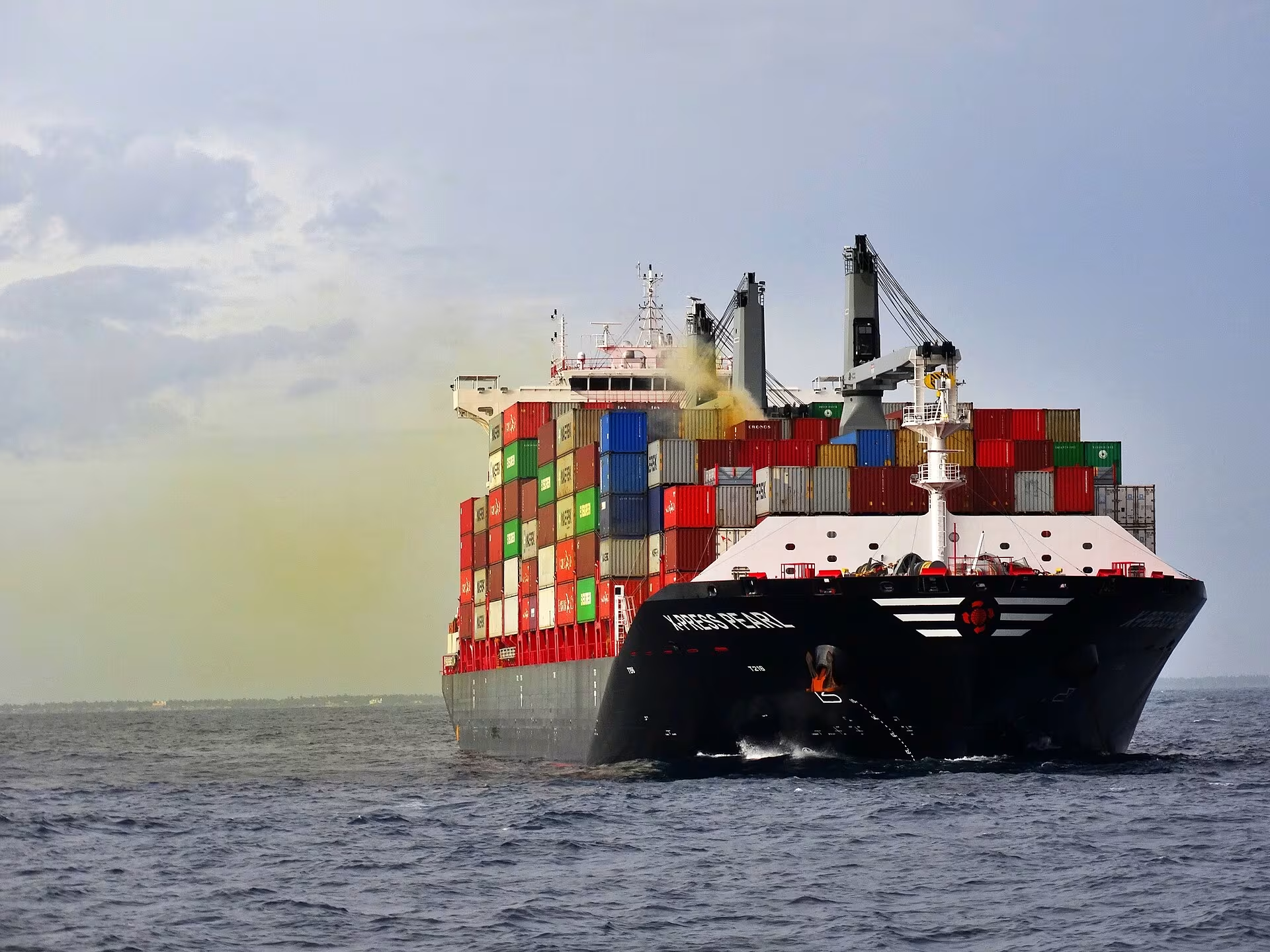
The X-Press Pearl caught fire on 20 May 2021 and sank a few weeks later off the Colombo coast. It was the worst marine pollution event in Sri Lanka's history. I walked the affected coastline in the months that followed, like a lot of Sri Lankans, I went down to see for myself.
What I had expected was a beach with plastic on it. What I saw was a beach made of plastic. Tiny pellets called nurdles, the raw material from which most plastic goods are manufactured, were heaped in drifts where the seaweed should have been. They glittered like millet. They went down at least six inches into the sand.
What stayed with me, more than the nurdles themselves, was the textile waste sitting alongside them. Cloth that had been on the beach for years before the Pearl burned was now caught up with the new pollution. You couldn't pick up the cloth without picking up the nurdles. The categories had collapsed.
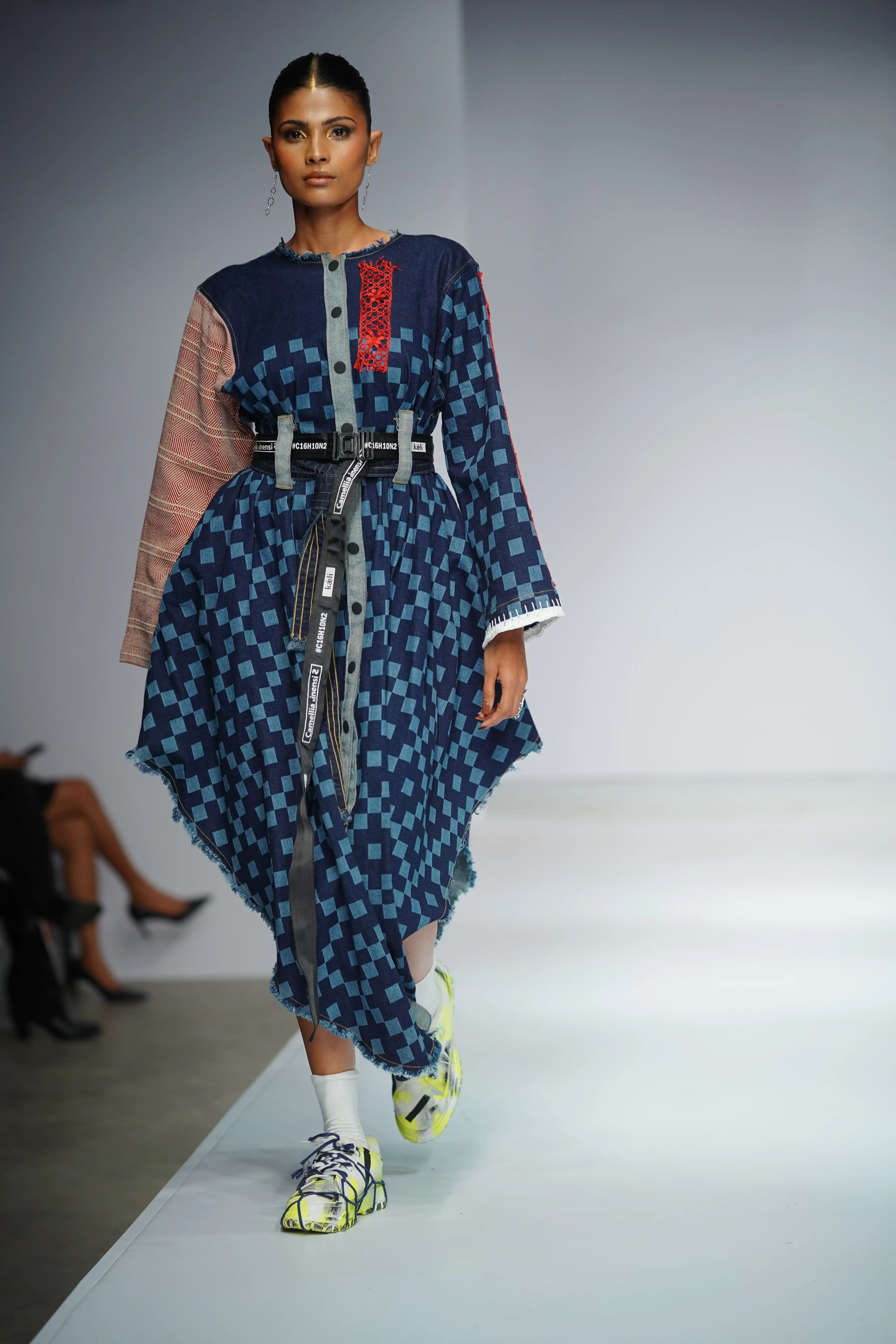
Two years later I made a collection called kaeli – resurgence. The same Sinhala root as my first collection in Taipei — pieces — but the pieces had changed. They were no longer industrial leftovers. They were what the ocean was giving back.
The Redress Design Award is the largest sustainable fashion design contest in the world. They named resurgence runner-up. What that recognition gave me, more than the prize money, was acknowledgement. I had been treating the ocean as a footnote in work that was really about the cotton industry. After the Pearl I knew it was the work.
BY
Ruwanthi Gajadeera